
TL;DR: For most situations, the Kodak FunSaver wins. ISO 800 film gives it more range in mixed light, and the warm tones are versatile. If you want punchier, cooler colors in bright daylight, the Fujifilm QuickSnap is the better pick. For black and white, the Ilford XP2 delivers cleaner, smoother results than the Kodak Tri-X, and develops in standard C-41 chemistry which any lab can handle. All prices are verified as of June 2026. Check Amazon before purchasing since film product pricing shifts.
Disposable cameras are the lowest-friction way to start shooting film. No loading, no settings, no risk of accidentally opening the back. You pick it up, point it, press the shutter. You drop it at a lab when you’re done.
That simplicity comes with real trade-offs: plastic lenses, fixed exposure, 27 frames. But for events, travel, or testing whether analog photography appeals to you before spending $70 on a used SLR, a disposable camera makes sense.
The question is which one to buy, because the differences in film look, ISO, and color rendering are meaningful enough to matter.
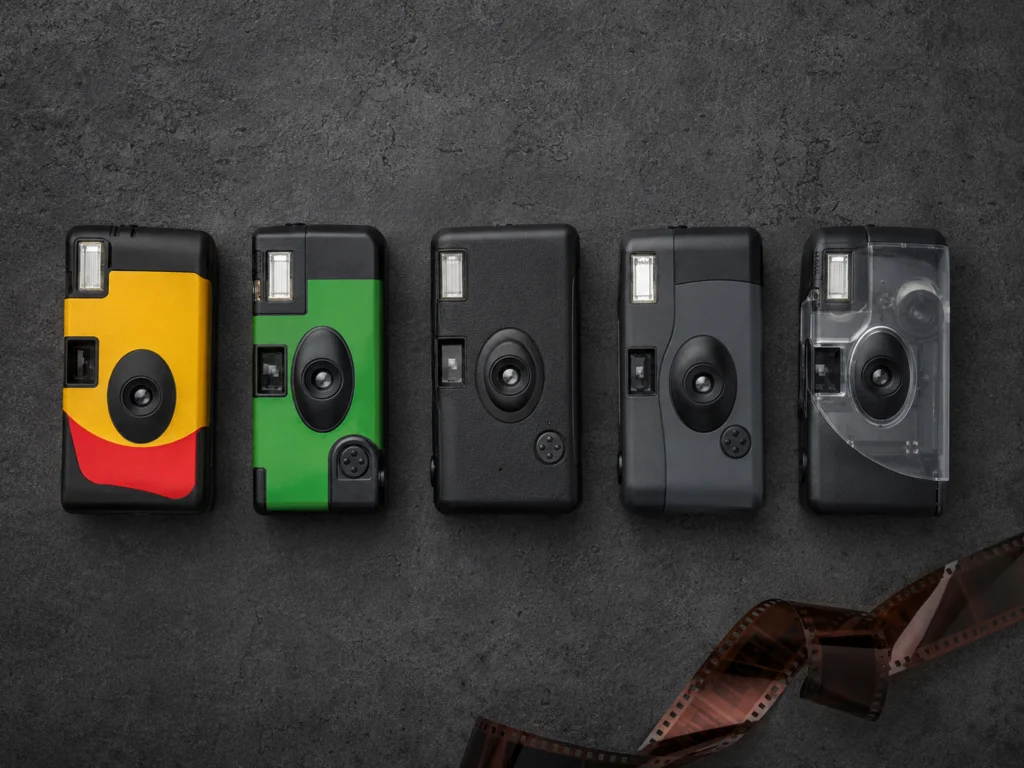
This article compares five cameras tested under the same conditions: Kodak FunSaver, Fujifilm QuickSnap Flash 400, Ilford XP2 Super Single Use, Kodak Tri-X Single Use, and Fujifilm QuickSnap Waterproof.
Each camera was shot at equivalent subjects in equivalent light with only dust removal applied to scans. No color correction, no editing. What you see is what the camera gives you.
For context on how disposables fit into the broader world of film photography (including when it makes more sense to buy a used SLR instead), see Film Photography for Beginners: What You Actually Need to Get Started.
What to Know Before You Buy
All disposable cameras share the same fundamental constraints:
Fixed focus
There’s no way to adjust focus. Disposable cameras are designed to render everything sharp from approximately 3–4 feet to infinity.
Subjects closer than 3–4 feet will be out of focus. This is a function of the deep depth of field from a small aperture (typically f/9.5–f/10), not a defect.
Fixed exposure
The aperture and shutter speed are fixed, usually around f/10, 1/100 sec. The only variable is your film’s ISO speed. Higher ISO = usable in more lighting situations.
27 exposures per camera
All major disposable cameras come with 27 exposures. Unlike a reusable camera where you can swap film, you’re committed to one film stock for the life of the camera.
Plastic optics.
Every disposable camera has a plastic lens. Images from disposables will have softer edges, less contrast, and more vignetting than images from a glass-lens camera.
That quality is part of the aesthetic for many people, but it’s worth knowing before you buy.
Flash is manual.
On most disposables, the flash doesn’t fire automatically. You charge it (hold the flash button for 5–10 seconds until a red indicator light appears) and fire it manually.
If you’re shooting indoors or in low light, charge the flash before every shot. The most common mistake with disposable cameras is forgetting to use the flash indoors.
The Five Cameras Compared
1. Kodak FunSaver — Best Overall
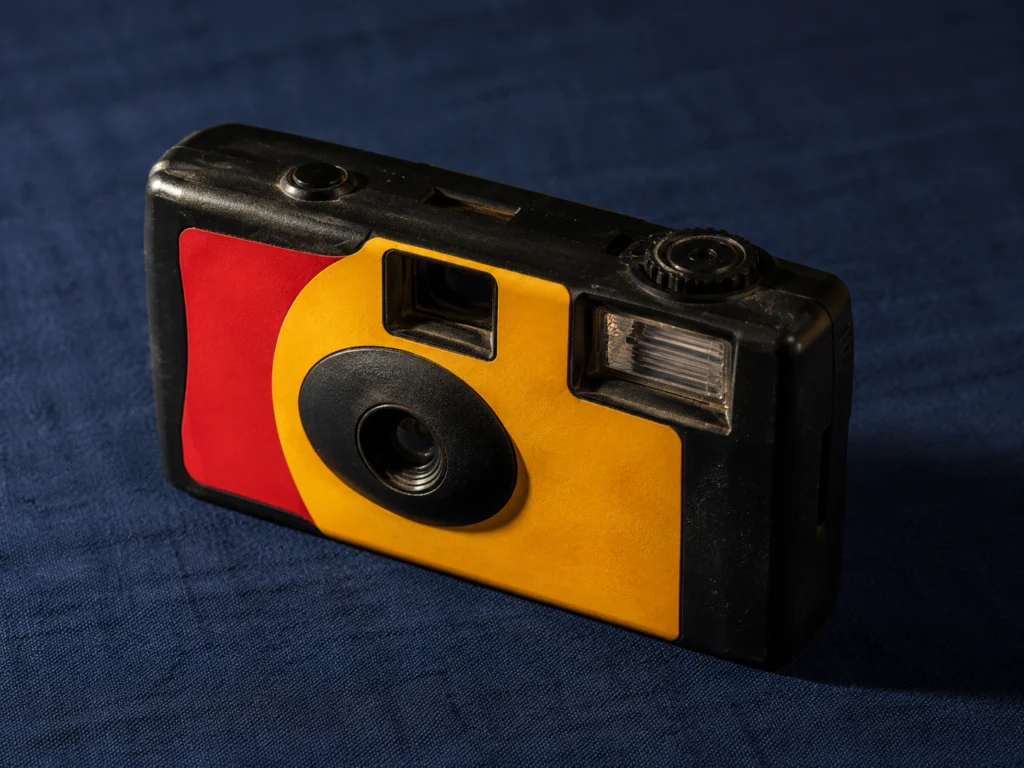
Price: ~$10–$14 per camera on Amazon Film: Kodak Gold 800 (ISO 800 color negative) Exposures: 27 Lens: ~30mm f/10 Shutter: ~1/100 sec Flash range: ~4–11 feet
The Kodak FunSaver has been the most popular disposable camera since its launch in 1989.
The main reason it holds that position in 2026 is the ISO 800 film, one full stop faster than the ISO 400 in the Fujifilm QuickSnap, which means it performs noticeably better in mixed or low light.
The color signature is warm Kodak tones: reds and yellows pop, skin tones look rich and natural. Grain is visible but not distracting.
The Darkroom, a professional film lab that develops hundreds of disposable cameras weekly, compared eight major single-use cameras and found the FunSaver produced the sharpest results of the group, noting that despite its plastic lens and low price, it “seemed to be sharper than the rest.”
The flash charges manually and fires reliably. The shutter is responsive without significant lag. The overall build is lightweight plastic that handles drops reasonably well.
Where it excels: Parties, indoor events, situations with mixed or unpredictable light. The ISO 800 film is the deciding advantage here. In a room lit by Edison bulbs, the FunSaver gives you usable images where the QuickSnap might struggle.
Where it falls short: In very bright outdoor conditions, ISO 800 can slightly overexpose highlights. In direct sun, the QuickSnap or a lower-ISO option gives you more control over the tonal range.
Best overall pick: The Kodak FunSaver is the most versatile disposable available in 2026. ISO 800 film, warm tones, reliable flash. Available in single or 2-pack. Check current price on Amazon
2. Fujifilm QuickSnap Flash 400 — Best for Outdoor Color
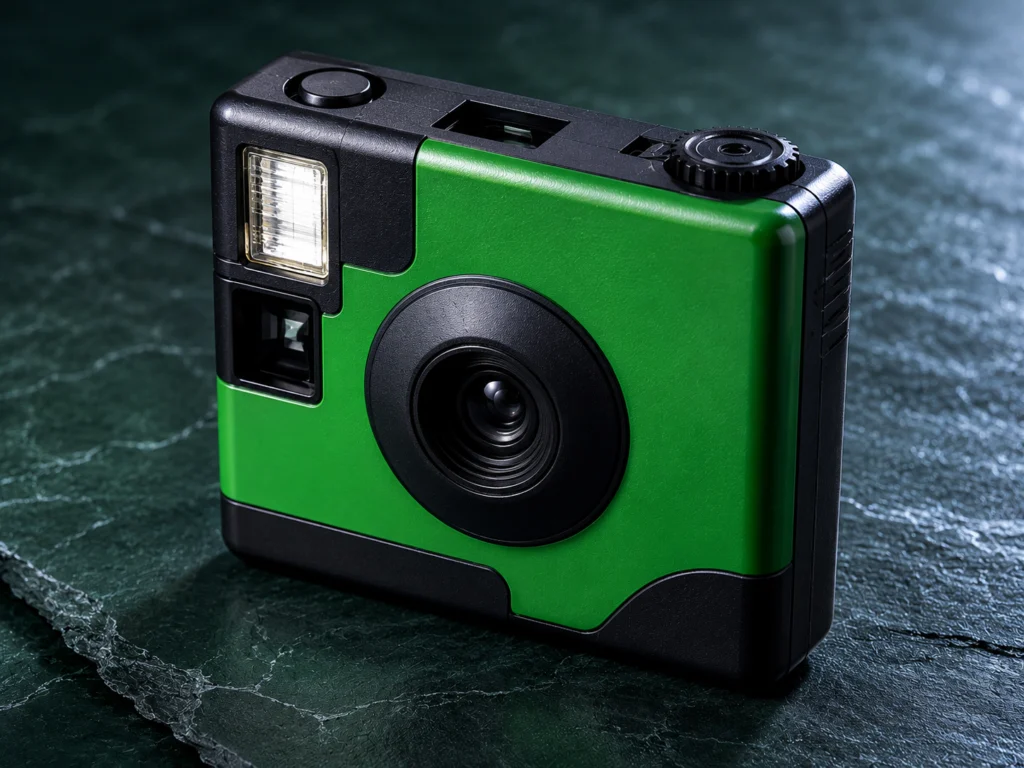
Price: ~$13–$18 per camera on Amazon Film: Fujicolor Superia X-TRA 400 (ISO 400 color negative) Exposures: 27 Lens: ~32mm f/10 Shutter: ~1/140 sec Flash range: ~3–10 feet
Fujifilm released the QuickSnap in 1986, the first 35mm camera ever marketed as “disposable.” The current version is pre-loaded with Fujicolor Superia X-TRA 400, which delivers fine grain and cooler, more natural colors than Kodak.
One caveat worth knowing: some QuickSnap cameras circulating in 2025–2026 appear to be loaded with “Made in USA” film that may be manufactured by Kodak rather than Fujifilm.
The color signature of these batches runs slightly warmer and less distinctly “Fuji” than classic Superia X-TRA. The camera you receive may vary.
The core characteristics (ISO 400, fine grain, cooler tones than Kodak) hold across both versions, but don’t be surprised if your results look slightly different from older QuickSnap reviews.
The lens is slightly longer at 32mm versus the FunSaver’s 30mm, with a marginally faster shutter speed of 1/140 sec. In practice, the difference in motion blur is negligible for casual shooting.
The flash features a continuous switch rather than a hold-and-charge mechanism. You flip it on and it stays ready, making it faster to use in rapidly changing situations.
For events where you’re moving quickly between indoor and outdoor settings, this is a small but genuine practical advantage.
Where it excels: Beaches, outdoor festivals, travel photography in bright conditions. The cool Fujifilm color science makes skies pop blue, foliage pop green, and water look vivid. In strong daylight, the QuickSnap produces more visually striking images than the FunSaver.
Where it falls short: One full stop slower than the FunSaver at ISO 400. Indoors without strong available light, images can go underexposed even with flash. In mixed or transitional lighting (sunset, shade), the FunSaver’s higher ISO is the more forgiving choice.
Best for outdoor shooting: The Fujifilm QuickSnap’s Fujicolor 400 delivers the coolest, punchiest color of any disposable camera. Ideal for beach, travel, and outdoor events in good light. Check current price on Amazon
3. Ilford XP2 Super Single Use — Best Black and White
Price: ~$20–$28 per camera on Amazon Film: Ilford XP2 Super ISO 400 (C-41 black and white) Exposures: 27 Lens: 30mm f/9.5 Shutter: 1/100 sec Flash range: ~3m/10 feet
The Ilford XP2 Super Single Use Camera is the most consistently recommended black-and-white disposable on the market, and the reason is almost entirely the film stock: Ilford XP2 Super is a chromogenic black-and-white film developed using standard C-41 color chemistry, which means any lab that processes color film can handle it, at color film prices.
Traditional black-and-white film requires separate chemistry and adds $3–$8 per roll at most labs.
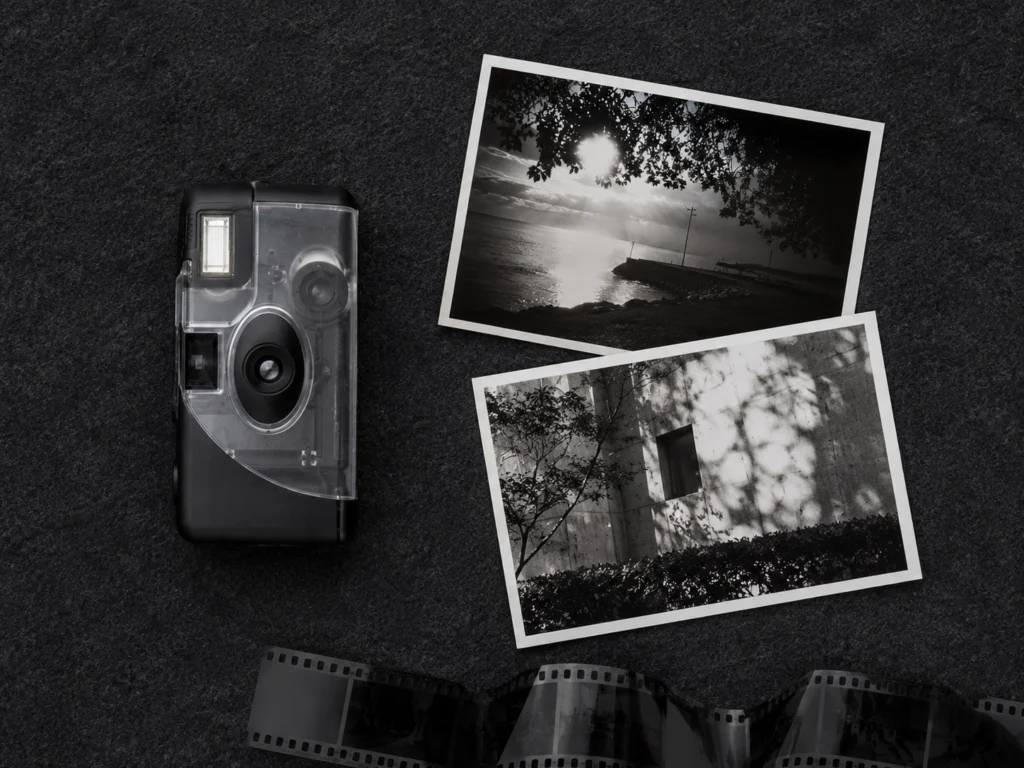
The film itself delivers fine grain, strong shadow contrast, and excellent tonal range. Where Kodak Tri-X is gritty and dramatic, XP2 is clean and refined. Shadows retain detail rather than blocking up to black.
Highlights roll off gradually rather than blowing out. The extra clear plastic casing on the front makes it meaningfully more durable than most disposables.
The film has wide exposure latitude. It handles both overexposure and underexposure better than most dedicated black-and-white emulsions, which matters on a camera where you have zero control over exposure settings.
Where it excels: Outdoor portraiture, architectural shots, cityscapes, nature photography where you want a classic monochrome look without the processing complexity of true B&W film.
Where it falls short: At ISO 400 with f/9.5 aperture, it’s limited indoors without flash. The flash range caps at 3 meters, closer than most situations, but worth knowing. Not the right choice for dark bars or dim indoor venues.
4. Kodak Tri-X Single Use — Best for Dramatic Black and White
Price: ~$18–$26 per camera (availability varies) Film: Kodak Tri-X 400 (ISO 400 traditional black and white) Exposures: 27 Flash: Yes, dual-lens setup on current version
Kodak Tri-X 400 is one of the most historically significant film stocks ever made. It’s the film that documented civil rights protests, war zones, and rock and roll in the 1960s and 70s.
The single-use camera version loads you with 27 frames of that same legendary emulsion.
The character is the opposite of XP2: strong grain, punchy contrast, deep blacks that block quickly in shadow areas, highlights that glow in direct light.
Kodak Tri-X delivers bold, grainy drama, while Ilford XP2 provides smoother, more flexible tonal results. If that description of Tri-X sounds appealing, this is your camera.
One important caveat: Tri-X is a traditional black-and-white emulsion, not chromogenic. It requires dedicated black-and-white chemistry (not C-41).
Most professional labs can handle this, but not all, and it adds $3–$8 per roll in developing costs compared to XP2. Confirm before you send it.
Availability is less consistent than Kodak FunSaver or Fujifilm QuickSnap. Check B&H Photo or Adorama if Amazon stock is limited.
Where it excels: Street photography, live music, high-contrast outdoor scenes where you want a gritty, editorial look. This is a specialty camera for people who know they want that specific Tri-X aesthetic.
Where it falls short: More expensive, harder to find, requires specialized processing. For most beginners interested in black and white, XP2 is the more practical starting point.
5. Fujifilm QuickSnap Waterproof — Best for Water and Outdoor Adventures
Price: ~$16–$22 per camera Film: Fujicolor Superia X-TRA 800 (ISO 800 color negative) Exposures: 27 Waterproof rating: 35 feet / ~10 meters Lens: 32mm f/10 Flash: No
The QuickSnap Waterproof is the only camera on this list designed for use in and around water. The waterproof housing is rated to 35 feet, sufficient for pool use, snorkeling, and beach conditions. It loads ISO 800 film without a flash, compensating for the light loss underwater.
The Fujifilm QuickSnap Waterproof edges out the Kodak waterproof equivalent with a significantly better quality lens and slightly nicer colors for underwater photographs.
Underwater photography skews heavily blue-green because water filters out red wavelengths at depth. This is a physical property of water, not a flaw in the camera.
ISO 800 film helps capture detail in lower-light underwater conditions, but you still need ambient light. This is not a low-light camera.
Where it excels: Pool parties, beach vacations, snorkeling, river kayaking. Any situation where a regular camera would be at risk. The only option on this list that can go underwater.
Where it falls short: No flash makes it useless indoors. Fixed ISO 800 with no flash in bright light can push toward overexposure outdoors. Best treated as a situational camera for water activities specifically.
Side-by-Side Comparison
| Camera | ISO | Color Temp | Lens (approx) | Flash | Best For |
|---|---|---|---|---|---|
| Kodak FunSaver | 800 | Warm | 30mm f/10 | Manual charge | General / events / mixed light |
| Fujifilm QuickSnap Flash 400 | 400 | Cool / neutral | 32mm f/10 | Continuous switch | Outdoor / travel / bright conditions |
| Ilford XP2 Super | 400 | N/A (B&W) | 30mm f/9.5 | Manual | B&W outdoor / portraits |
| Kodak Tri-X Single Use | 400 | N/A (B&W) | N/A | Yes | Dramatic B&W / street |
| Fujifilm QuickSnap Waterproof | 800 | Cool | 32mm f/10 | No | Water / adventure |
Availability varies by retailer. Check Amazon and B&H Photo for current stock.
Which One Should You Actually Buy
Buy the Kodak FunSaver if you’re not sure what you’re shooting yet, or if you’re buying for an event with unpredictable lighting.
ISO 800 is the most important practical advantage of any disposable camera. It gives you usable images in situations where ISO 400 cameras produce murky, underexposed frames.
Buy the Fujifilm QuickSnap if you’re shooting primarily outdoors in good light and want cooler, punchier color.
Beach trips, hikes, outdoor festivals. The Fujifilm color science genuinely shines in those conditions in a way the Kodak doesn’t.
Buy the Ilford XP2 if you want black-and-white film and don’t want to deal with specialty processing. The C-41 development compatibility makes it the most practical B&W disposable available.
Buy the Kodak Tri-X if you want maximum grain and contrast and know you can find a lab that handles traditional black-and-white chemistry. This is a deliberate aesthetic choice, not a beginner recommendation.
Buy the Fujifilm QuickSnap Waterproof specifically for water situations. Don’t buy it as a general-purpose camera.
The Total Cost You Should Budget For
Disposable cameras look cheap until you factor in development. Here’s the honest total:
| Camera | Camera Price | Development + Scan | Total per Roll |
|---|---|---|---|
| Kodak FunSaver | ~$10–$14 | ~$15–$22 | ~$25–$36 |
| Fujifilm QuickSnap | ~$13–$18 | ~$15–$22 | ~$28–$40 |
| Ilford XP2 (C-41) | ~$20–$28 | ~$15–$22 | ~$35–$50 |
| Kodak Tri-X (B&W) | ~$18–$26 | ~$18–$30 | ~$36–$56 |
| QuickSnap Waterproof | ~$16–$22 | ~$15–$22 | ~$31–$44 |
Budget $25–$40 per roll when you include development. That’s the real cost of a disposable camera, not the sticker price. If that number makes you want to be more intentional about each shot, good. That’s one of the things film photography teaches.
Buying two cameras for an event? The Kodak FunSaver 2-pack saves a few dollars over buying two singles, and gives you a backup if one gets damaged. Check current price on Amazon
How to Get Disposable Cameras Developed
Drop the entire camera (don’t open it) at a professional film lab or mail it to an online lab. The lab opens the camera, removes the film, and processes it like any other roll.
Do not use drugstore photo counters (CVS, Walgreens) for development. Scan quality from drugstore processing is generally too low for printing or serious editing, and results are inconsistent. Professional labs provide high-resolution scans that give you images worth keeping.
Recommended mail-in labs: The Darkroom (California) from $14/roll, Kubus Photo (Brooklyn) from $15/roll. Both return digital scans via email and mail back the negatives.
One note for Kodak Tri-X: confirm the lab offers black-and-white processing (not just C-41) before mailing it. The Darkroom and most dedicated film labs handle both, but some labs only process color.
Want to try film on a real camera instead? The Kodak Ektar H35N is a reusable half-frame 35mm camera that gives you 72 shots per roll at a similar price point to a disposable. No settings needed, but you get a glass lens and a reusable body. Check current price on Amazon
FAQ
It depends on the light. The Kodak FunSaver has ISO 800 film, making it more versatile in mixed, low, or indoor lighting. The Fujifilm QuickSnap has ISO 400 film with a cooler color signature that performs better in bright outdoor conditions. For a general-purpose buy or an event with unknown lighting, FunSaver. For outdoor shooting in good light, QuickSnap.
Technically yes. Some experienced film photographers pry open used disposable cameras and reload them with fresh 35mm film. The process is fiddly and not recommended for beginners. The camera bodies are designed to be single-use, and reloading risks light leaks if the back isn’t properly resealed. For the cost difference, buying a used point-and-shoot camera is a better investment.
Yes. Most disposable cameras have an expiration date on the packaging, typically 2–4 years from manufacture. Shooting expired film in a disposable produces color shifts, reduced contrast, and increased grain. Shooting a recently expired camera (expired 1–2 years ago) is generally fine. Shooting one expired 5+ years ago produces unpredictable and sometimes interesting results that aren’t what most people want from event photography.
Walgreens and CVS accept disposable cameras but the scan quality is generally too low for printing or serious editing. For photos worth keeping, use a professional lab. The cost difference is roughly $3–$7 per roll. For a once-in-a-lifetime event, that’s worth it.
All major disposable cameras (Kodak FunSaver, Fujifilm QuickSnap, Ilford XP2) come with 27 exposures. Some Lomography simple-use cameras offer 36 exposures. Lomography also makes a reusable simple-use format camera that accepts standard 35mm film rolls, so you’re not limited to 27 shots.
Different, not better. A disposable camera produces images with grain, warmth, vignetting, and tonal qualities that are genuinely different from digital. The limitation of 27 shots changes how guests behave with the camera. They’re more deliberate, and sometimes more candid, than with a smartphone. At weddings and parties, the disposable camera aesthetic is often what people are specifically trying to achieve. For everyday documentation (accurate colors, sharp details, instant review, no development cost) a phone is the more practical choice. A disposable camera is the right tool when the limitation and the aesthetic are specifically what you’re after.
Keep Reading
- Film Photography for Beginners: What You Actually Need to Get Started
- Best Film Cameras for Beginners Under $150 (That Are Actually Worth It)
- What Are Analog Hobbies? A Starter List for People Tired of Screens

We research screen-free habits, analog hobbies, and offline routines so you can spend less time scrolling and more time doing things that actually feel good. Every article on this site is based on primary research and verified sources, not recycled wellness advice.
Learn more on our About page.
Sources:
- Alison Winterroth Photography (2026). Testing the Top 5 Disposable Film Cameras. https://www.alisonwinterroth.com/testing-the-top-5-disposable-film-cameras-which-is-best/
- The Darkroom (2026). Best Single-Use Cameras of 2026. https://thedarkroom.com/disposable-cameras-top-cameras-reviewed-compared/
- The Darkroom (2025). Kodak FunSaver Film Reviews & Photos. https://thedarkroom.com/film/kodak-funsaver-single-use-disposable-camera/
- PetaPixel (2026). Best Disposable Cameras in 2026. https://petapixel.com/best-disposable-cameras/
- Digital Camera World (2024). Ilford XP2 Super 35mm film review. https://www.digitalcameraworld.com/reviews/ilford-xp2-super-35mm-film-review-where-black-and-white-meets-color
- Relics Film Lab (2026). 6 Best Disposable Cameras for Every Vibe. https://relicsfilmlab.com/blogs/guides/best-disposable-cameras-2026
- Pellica (2026). Fujifilm Superia Premium 400: Not Dead Yet, But For How Long? https://pellica.app/blog/fujifilm-superia-premium-400-available-2026/
- EMULSIVE (2023). Film Stock Review: Three Rolls With “Made in USA” Fujifilm 400. https://emulsive.org/reviews/film-reviews/fuji-film-reviews/film-stock-review-three-rolls-with-made-in-usa-fujifilm-400